WHAT WE DO
INNOVATION SCOUTING
Where we continuously track emerging innovative solutions to identify high-potential next-gen innovations that can progress through our innovation pipeline
COLLABORATIVE VALIDATION
Where brands, innovators and suppliers jointly test next-gen materials to validate performance and impact, de-risking adoption by sharing costs and lessons learned.
COMMERCIALISATION & SCALING
Where we co-create commercial models addressing key scaling barriers, operationalising them with innovators, brands and suppliers to accelerate market adoption
-
Innovators scouted+ 3500
-
Innovators supported193
-
Implementation cases421
-
Capital committed€ 2.5 bn+
INNOVATION HIGHLIGHTS

Nobody’s Child launches collection with regenerative cotton from Mattera

Circ® and Zalando launch first collection featuring Circ lyocell

MIRUM by Natural Fiber Welding collaborates with Reformation on the Rosetta Shoulder Bag 2024





Future Forward Factories
The “Future Forward Factories” project, initiated by Fashion for Good, focuses on transforming tier 2 processing in the textile industry through innovative low-impact, decarbonisation solutions. Dive into the India Blueprint now.
Latest News
[Webinar] Closing the Footwear Loop: A Roadmap Towards Circular Footwear Design
What does it actually take to design a shoe that can be recycled, repaired or resold?
For most of the industry, that is still a hard question to answer. A shoe combines many materials in permanently bonded assemblies, and the decisions that determine whether it can be recovered are made long before it reaches a customer.
The Circularity Guidance, developed by Fashion for Good and circular.fashion inside the Closing the Footwear Loop project, is a shared roadmap for changing that. It is structured around four building blocks:
• Circular Inputs
• Design for Recyclability
• Design for Longevity
• Enable Circulation
One framework does not fit every shoe. The Guidance shows how priorities shift across three archetypes, a Lifestyle Sneaker, a Leather Boot and a Running Shoe, and maps each action to the team that owns it: design, product development, sourcing, chemical compliance, quality, strategy, merchandising and marketing.
Fashion for Good Launches The Cotton Reloop Matrix Project To Unlock Commercial Scale For Recycled Cotton

Notes from NYCW: the word got quieter, the work didn't.
If you have been following the headlines over the past two years around our sector, you could be forgiven for thinking sustainability had quietly packed its bags. Targets are being reworded, the word itself is disappearing from earnings calls and press releases, and in the US, the policy signals clearly have shifted.

The State of Textile Recycling H1/2026
An in-depth look at the current state of textile-to-textile recycling, highlighting major developments from the first half of 2026.
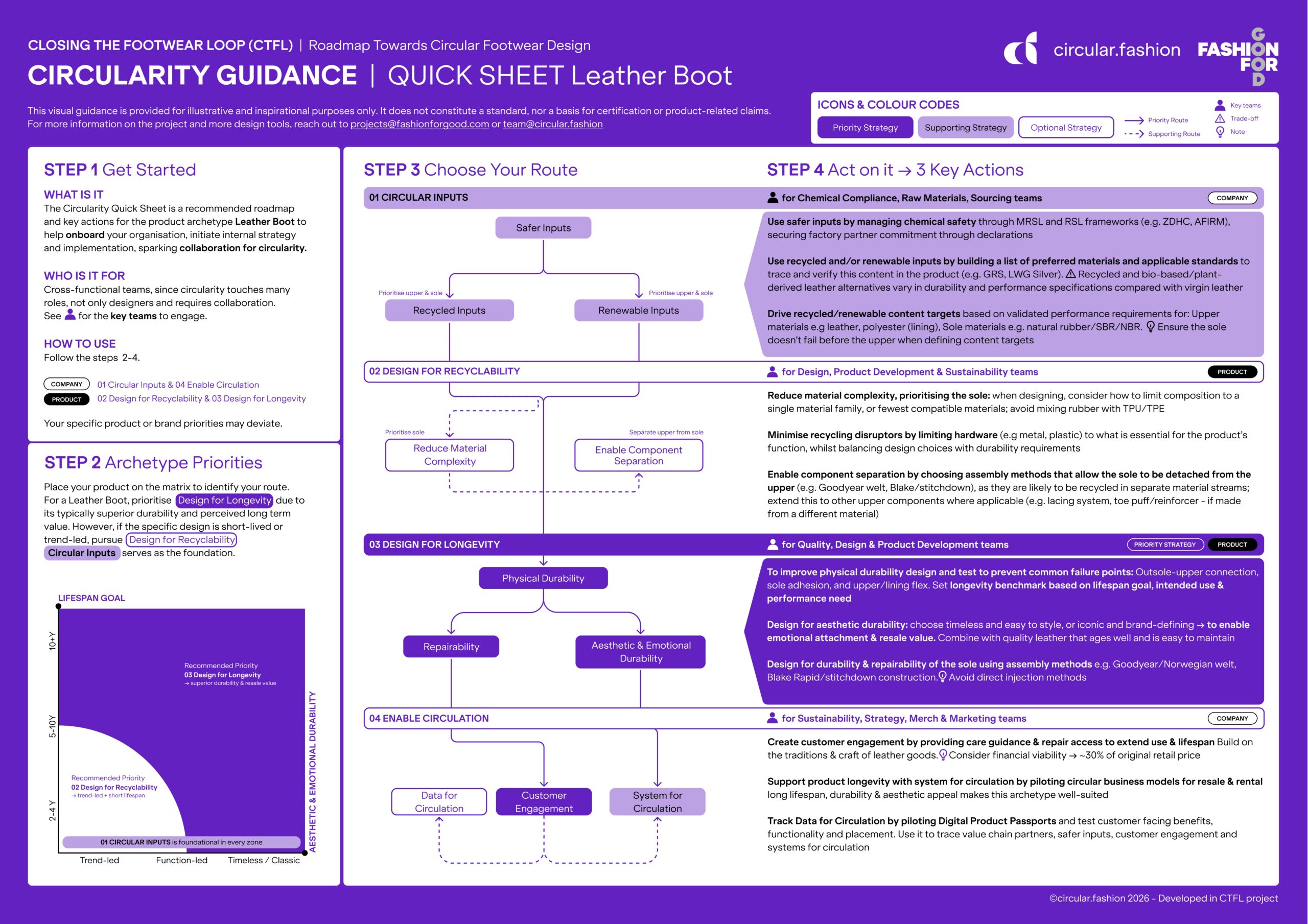
Fashion for Good Launches Today the Footwear Circularity Guidance Quick Sheet
The clothes you donated are ready to be recycled, but the system in between is not yet.
Most of us have done it, at least if you care about circularity in fashion: a bag by the door, a trip to the collection bin at the supermarket or the corner of the high street, the small satisfaction of knowing the clothes will go on to somewhere else. It’s one of the most hopeful gestures we make collectively as consumers, and for years the story we have been telling ourselves about it was mostly a good one: “someone else will wear them, someone else’s trash is another man’s treasure”.

What comes after PFAS?
As you start thinking of the next season’s autumn raincoat, we want to draw your attention to the messy, necessary work of replacing “forever chemicals” in the clothes we wear.

Moving Beyond PFAS: Fashion for Good Launches a New Project to Navigate the Emerging Landscape of PFAS-free Finishes
[Webinar] Closing the Loop Starts Here: Mapping Europe's Post-Consumer Footwear Waste
Our Phase 1 report dives deep into the material flow, composition and condition of post-consumer footwear waste in Europe, capturing on-the-ground findings from pilots with CETIA, Matoha, PICVISA and THE 8 IMPACT, and translating them into actionable insights for the industry.
Join Fashion for Good and Circle Economy for a 45-minute webinar to walk through the findings, the barriers, and what needs to happen next.
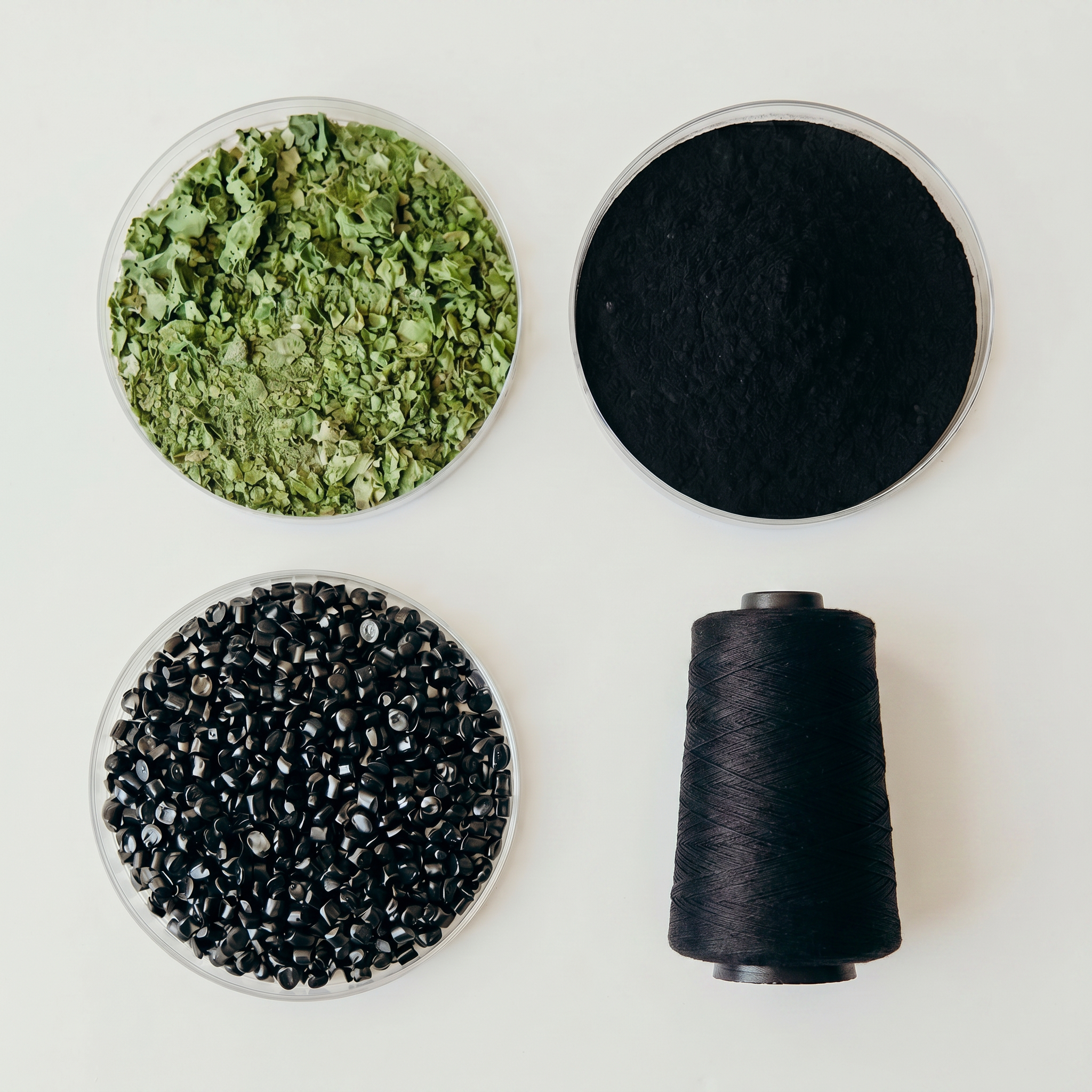
Black is finally getting its sustainability moment
There’s a good chance you’re wearing black right now. Black jeans, black top, black socks. It’s the wardrobe workhorse: the colour that goes with everything, never shows dirt (allegedly), and makes us all look a little more put-together than we actually are.
The thing nobody tells you at the checkout is that black is one of the most environmentally costly colours to produce in fashion. The culprit is a substance called carbon black, the pigment responsible for that deep, rich darkness in most black textiles. Carbon black is a byproduct of burning fossil fuels and its production is energy-intensive, carries health risks if improperly handled, and it locks the textile industry into yet another dependency on non-renewable resources.
What if the answer to black’s environmental cost was hiding in our waste streams all along?

Textile Recycling Is Scaling. Why Is Post-Consumer Integration Difficult?

When two innovation leaders become one
In most acquisition stories, there’s a clear narrative: one company wins, one gets absorbed. A larger player buys a smaller one, rolls up the technology, and moves on. That’s not what happened here.
When Carbonfact acquired Vaayu about a week ago, two pioneering fashion innovators – both growing, both with genuine customer traction – chose to stop building in parallel and start building together. Vaayu had 100+ brands. Carbonfact had 200+. Neither was running out of road.
For us, this is a rare and instructive moment. It raises questions we think are worth asking openly: about mission versus momentum, about what consolidation looks like when it’s driven by conviction rather than necessity, and about what it actually takes to build lasting infrastructure for an industry that urgently needs to decarbonise.
We sat down with Marc Laurent, Co-Founder & CEO at Carbonfact, to hear the story in his own words.

New Report: We can recycle a plastic bottle in our sleep. We have (almost) no idea what to do with a shoe.
Every year, the world makes 23.8 billion pairs of shoes, which is roughly three pairs for every person alive. And when those shoes are worn out (or just out of fashion, or missing a partner, or slightly soiled) almost none of them become anything useful again.
Less than 1% of discarded textiles and footwear globally is recycled. Not 10%. Not 5%. One. The rest goes to landfill, to incineration, or on a long journey to markets in UAE, China, Pakistan, and India that were never designed to be Europe’s cleanup crew.
This is not because nobody cares, but because shoes, as objects, are genuinely one of the most complicated things we have ever tried to keep in circulation. And it is because, until now, no one had looked closely enough at the problem to know exactly where to start.
Together with Circle Economy, we spent the last year looking. This is what we found.
New Report: Closing the Footwear Loop
[Webinar] Sorting for Circularity: Inside Project Rewear
Sorting for Circularity: Inside Project Rewear — a new study from Fashion for Good and Circle Economy.
Across four EU countries, Ghana and Pakistan, our team and partners examined 8,280 garments at sorting facilities, mapped global trade flows, interviewed dozens of stakeholders and tested three innovation pilots.
The findings cut through the noise around circular fashion.
Join us for a 45-minute webinar to walk through the findings, the tensions, and what’s needed next.
Read the report -> https://www.fashionforgood.com/case-study/sorting-for-circularity-rewear/

New Report: What actually happens to clothes after you donate them?

What Happens When Fashion Learns from Nature?

Solving the Feedstock Gap: Unlocking Post-consumer Feedstocks for Textile-to-Textile Recycling in Europe
Mass Balance Attribution: Never heard of it?

Fashion for Good Mobilises Industry To Adopt Mass Balance Attribution And Accelerate Decarbonisation

In Conversation with KUORI: Transforming food waste into biodegradable outersoles
In Conversation with Algenesis Labs: Giving the breakdown on biodegradable footwear
What's Really Inside Your Running Shoe? Unpacking Footwear Material Innovation

Advancing The Future Of Stretch: Fashion for Good Launches New Project To Validate Bio-based And Recycled Elastane
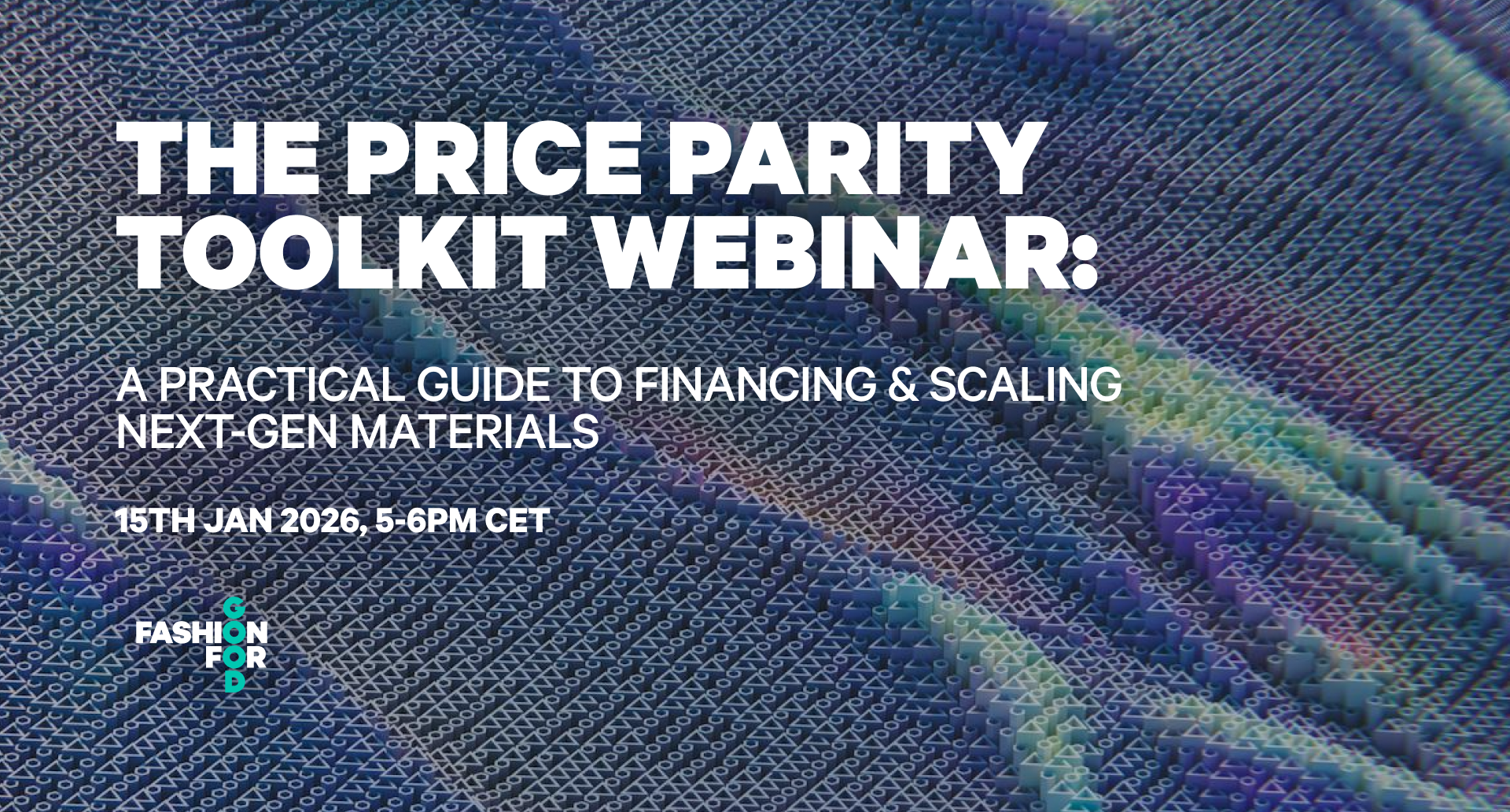
[Webinar] A Practical Guide To Financing And Scaling Next-Gen Materials
What would it take for next-gen materials to compete on cost and become a practical choice for the wider industry? 🚀
In this session, we’ll introduce the Price Parity Toolkit, a new financing mechanism designed to remove price barriers and help next-gen materials move through supply chains without cost escalation. Developed with support from Laudes Foundation and key collaborators, the toolkit shows how premium decoupling can unlock faster adoption of lower-impact fibres at scale.
Our speakers will explore how this approach works in practice, including:
👉 clear guidance on how premium decoupling can be applied
👉 what each part of the toolkit covers and how to navigate it
👉 examples from early adopters and experts who contributed to the framework
💡 This webinar is designed for innovators, brands, producers, sourcing leads, finance teams, and anyone assessing pathways to bring next-gen materials into mainstream production while managing commercial constraints. It is open to all industry stakeholders interested in practical tools that enable wider uptake of new materials.
[Webinar] Future Forward Factories India: Actioning the Blueprint
What would it take to make clean textile manufacturing the default and affordable for the fashion industry? 🚀
Join us, Fashion for Good, for an exclusive LinkedIn Live webinar: “Actioning the Blueprint” — happening on the 8th of December.
In this session, we’ll introduce Future Forward Factory’s Open Source Resource, developed in collaboration with Arvind Limited, and explore how open innovation and collaborative models can accelerate cleaner textile manufacturing at scale.
Our speakers will dive into key questions on how the first open source blueprint of Future Forward Factories can be put into practice, including:
👉 easy tips and guides on navigating the blueprint
👉 different sections of blueprints and what they entail
👉 support and assistance programs available for blueprint implementation
💡 This webinar is primarily intended for the prospective users of the Blueprint — decision-makers, CXOs, and sustainability or operations strategists from Indian textile manufacturers seeking to build future resilience in their facilities — but is open to all industry stakeholders interested in understanding the practical tools of decarbonising Tier 2 processes.
Don’t miss this opportunity to gain insights into how we can collectively transform the way fashion is made — from concept to factory floor.
Breaking The Decarbonisation Deadlock: Fashion for Good Unveils First-of-its-kind Blueprint For Near-net-zero Textile Manufacturing

The Fashion Innovation Overview 2025

From Premiums To Parity: How Fashion for Good Is Rewriting the Economics of New Materials

Fashion for Good Launches “Beyond50 Denim” to Address Hemp Integration Barriers In Global Denim Production
[Webinar] Catalysing Future Forward Factories
What would it take to make clean textile manufacturing the default — and affordable — for the fashion industry?
Join us at Climate Week NYC for the Catalysing Future Forward Factories session, as a part of The Climate and Nature Studio.
In this session, we will challenge long-held assumptions around risk, responsibility, and the business model of the fashion industry:
👉 Are long-term capacity reservations truly a no-go area for fashion brands? What can be done to address underlying concerns, and is there potential to unlock conditional commitments?
👉 Philanthropy values catalytic capital that can drive market transformation. FFF aims to create demonstrator facilities that are investible, shovel-ready projects. What are the roadblocks to progress now?
👉 Should corporate capital step up? Why should philanthropy bear the full burden of this transition?

The Circularity Race: How Fashion for Good is Changing the Footwear Industry

Fashion for Good Unveils “The Next Stride”, A New Footwear Project To Replace Fossil Fuel Material With Bio-based Sole Innovation

In Conversation with Smartex: Utilising AI to reduce fabric production waste

In Conversation with Reverse Resource: Tackling the industry's textile waste

What Happens Next? Your T-Shirt's Journey Through Repair, Resale, and Recycling

The Intelligent Factory: How AI and Digital Innovation are Tackling Textile Waste
Journey to Scale: Syre

Journey to Scale: Imogo

Journey to Scale: NTX

Journey to Scale: TrusTrace
[Webinar] How EU Policies Will Impact Textile & Footwear Recycling
How are EU policies shaping textile & footwear recycling? 🔍
Join Fashion for Good and Policy Hub for an open webinar designed to support recyclers in navigating the evolving EU regulatory landscape.
From eco-design requirements to extended producer responsibility (EPR) schemes and traceability obligations, this session will provide clarity on what’s coming, reflect on the potential implications for recyclers, and how to prepare strategically.
🎯 What we’ll cover:
✅ Ecodesign for Sustainable Products Regulation (ESPR): What is coming, what technical questions are on the table, and what would be the potential impacts for recyclers?
✅ Waste Framework Directive (WFD): What to expect from the implementation of EPR schemes and upcoming work on ecomodulation criteria?
✅ Data & Traceability: How will the digital product passport and revisions to physical labelling on product composition affect recycling operations?
✅ Opportunities for Innovation & Collaboration: Where recyclers fit in the circular economy vision under EU policy—and how to position strategically?
The session will include updated insights on the discussions, practical implications for recyclers, and time for questions and discussion.

Fashion for Good And Altmat To Accelerate Adoption of Next-gen Fibres Through Altag® Fiber Club

Findings from T-REX project

In Conversation with SEFF: Reengineering Hemp into high performance material

In Conversation with Pili: Reducing the impact of Indigo

Rethinking Denim: Designing Change From Fibre To Finish

Sourcing Journal Exclusive: Arvind, Fashion for Good’s ‘Near-Carbon-Neutral’ Factory Initiative Seeks to Break Industry Paralysis
What will it take for low-impact textile manufacturing innovation to operationalise and scale beyond the “blah blah blah” of good intentions but lethargic action that has locked the industry in action-plan paralysis?

Fashion For Good And Arvind Limited Launch Future Forward Factories India: Embedding Innovation In Manufacturing
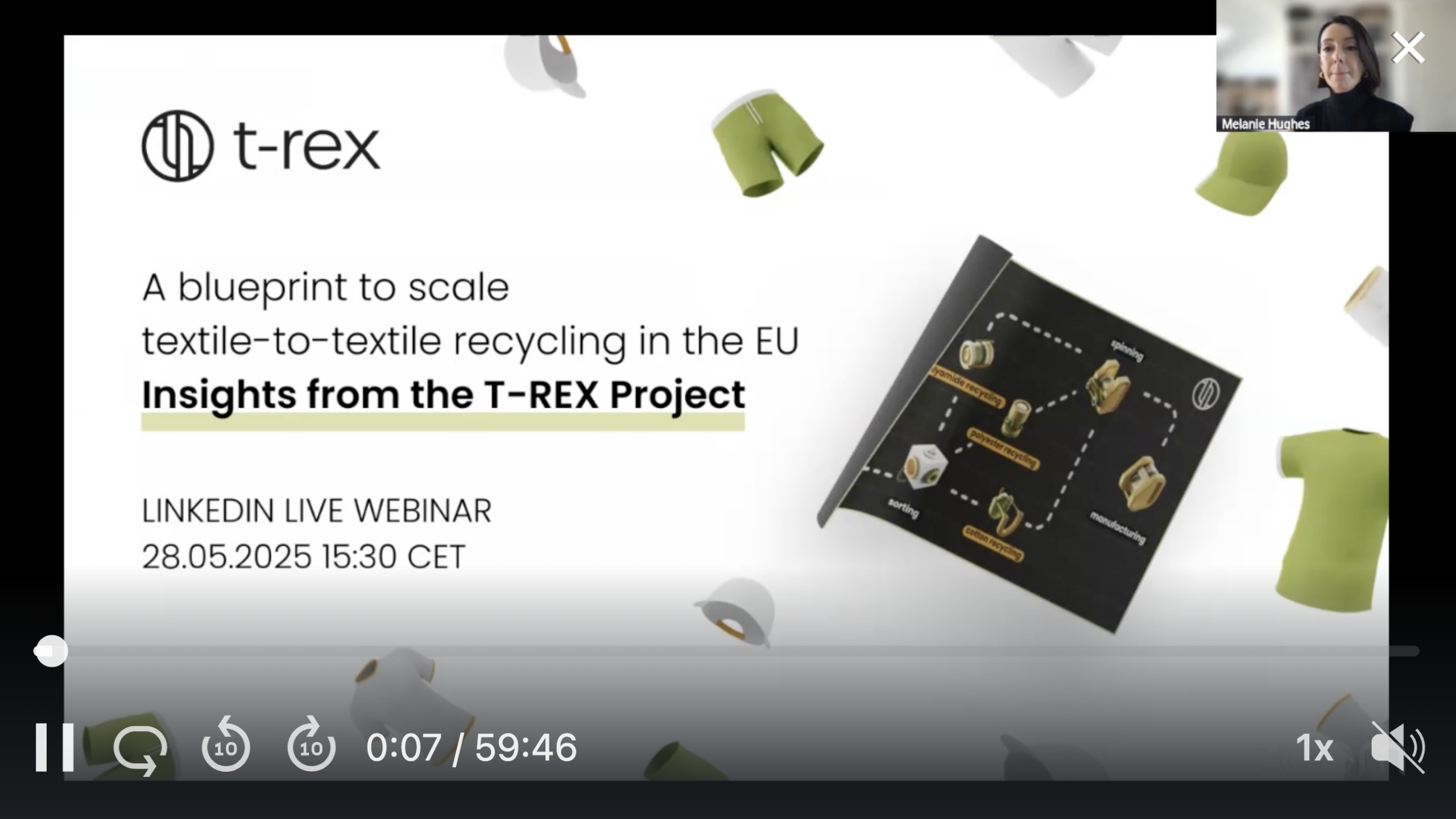
[Webinar] A blueprint to scale textile-to-textile recycling in the EU: T-REX Project
Join us as we unveil our proposed blueprint for scaling textile-to-textile recycling in the EU, developed within the EU-funded T-REX Project | Textile Recycling Excellence.
Hear directly from our consortium partners as we share key insights from the techno-economic assessment, summary LCA, and technical guidance for designers. Discover how the project explored the challenges of recycling post-consumer textile waste, from collecting household end-of-use textiles to transforming polyester, polyamide 6, and cellulosic materials into new garments.

Pioneering EU funded T-REX Project Celebrates Completion and Reveals Blueprint for Scaling Textile-to-Textile Recycling in Europe

Good Fashion Fund partners with Sharadha Terry for new rugs unit
AMSTERDAM – The Good Fashion Fund, managed by FOUNT, has made an investment in Sharadha Terry Products Private Limited (“STPPL”) – a renowned Indian manufacturer and exporter of high-quality bed and bath products under the MicroCotton® brand from Metupalayam. The 1.75 million US Dollar loan will support STPPL’ investment in the set-up of their new bath and area rugs unit (Sri Gugan Mills) in Metupalayam, Tamil Nadu. With this investment, the Good Fashion Fund is fully invested, and FOUNT aims to establish a follow-up fund (Good Fashion Fund 2.0) building on the successful track record, networks, lessons learned and methodologies of GFF.

In Conversation with Balena: Scaling circular materials

In Conversation with The 8 Impact: Diverting sneakers from incineration and landfills

In Conversation with PICVISA: Advancing footwear recycling
[Webinar] What is Fibre Fragmentation, and Why Does It Matter More Than Ever?
Step into the future of fibre fragmentation! 🚀
Join us, Fashion for Good, for an insightful LinkedIn live webinar next Tuesday, April 8th, from 5-6 PM CET!
We’ll be diving deep into the critical findings and insights from our recent report, “Behind the Break,” in collaboration with The Microfibre Consortium, uncovering the key topics around fibre fragmentation in the textile and fashion industry.
In this session, we’ll cover:
✅ What is fibre fragmentation, and why is it more crucial than ever? (Definition, Sources & Pathways, Effects on human and animal health)
✅ How is fibre fragmentation measured, and are we truly capturing its impact? (Root Causes, Test methods, Impact (biodegradability and toxicity)
✅ What’s the industry’s role in mitigating fibre fragmentation? (Solutions Portfolio, Regulation)
✅ What are the essential next steps for the industry? (Future Direction)
Don’t miss this opportunity to be part of the conversation and learn how we can collectively address this pressing issue.

What is Footwear Circularity?
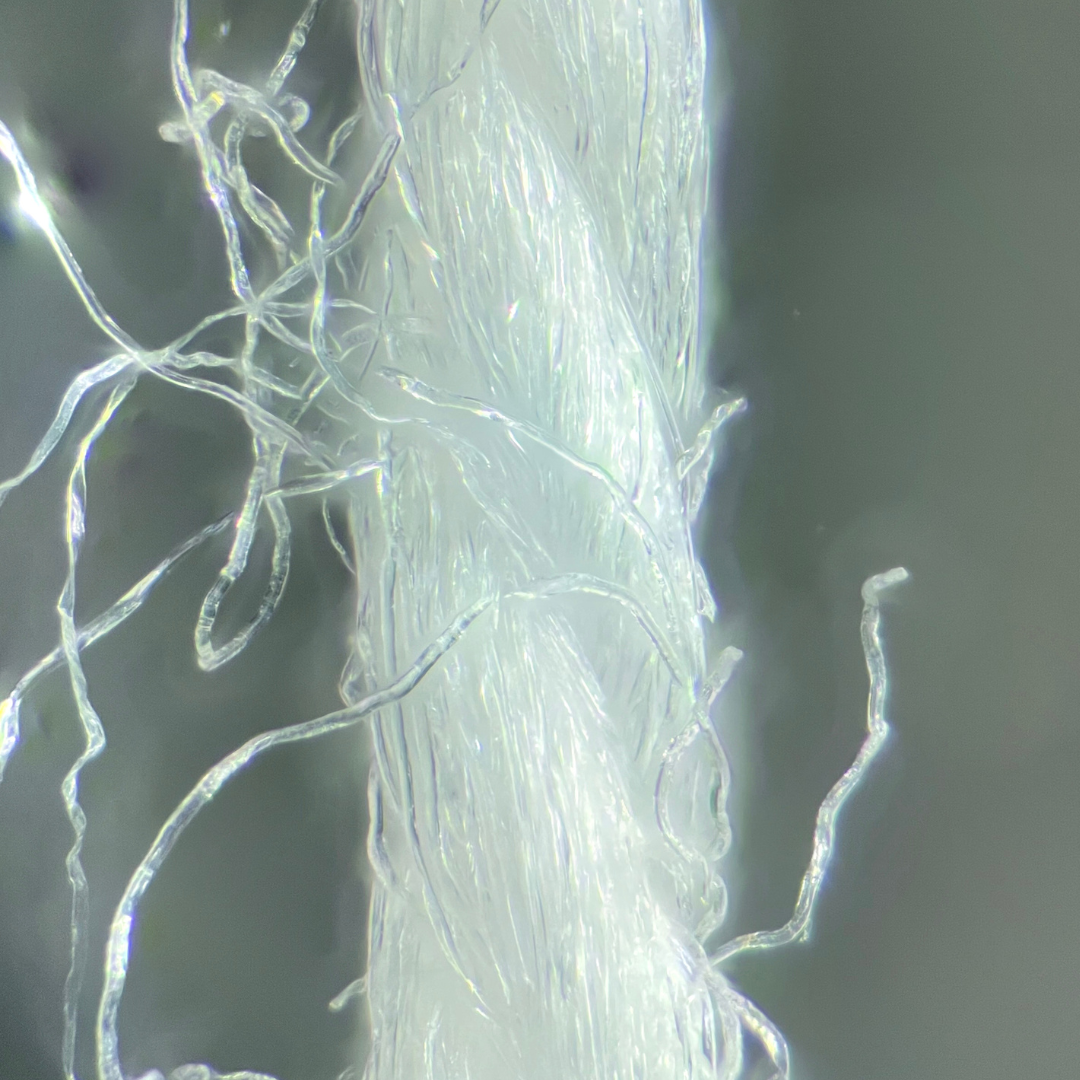
Fashion for Good Launches Fibre Fragmentation Project - Behind the Break
In Conversation with Made2Flow: Gathering healthy impact data across the supply chain
In Conversation with Vaayu: Creating transparency across impact data

Our Findings from the Biophilica Pilot
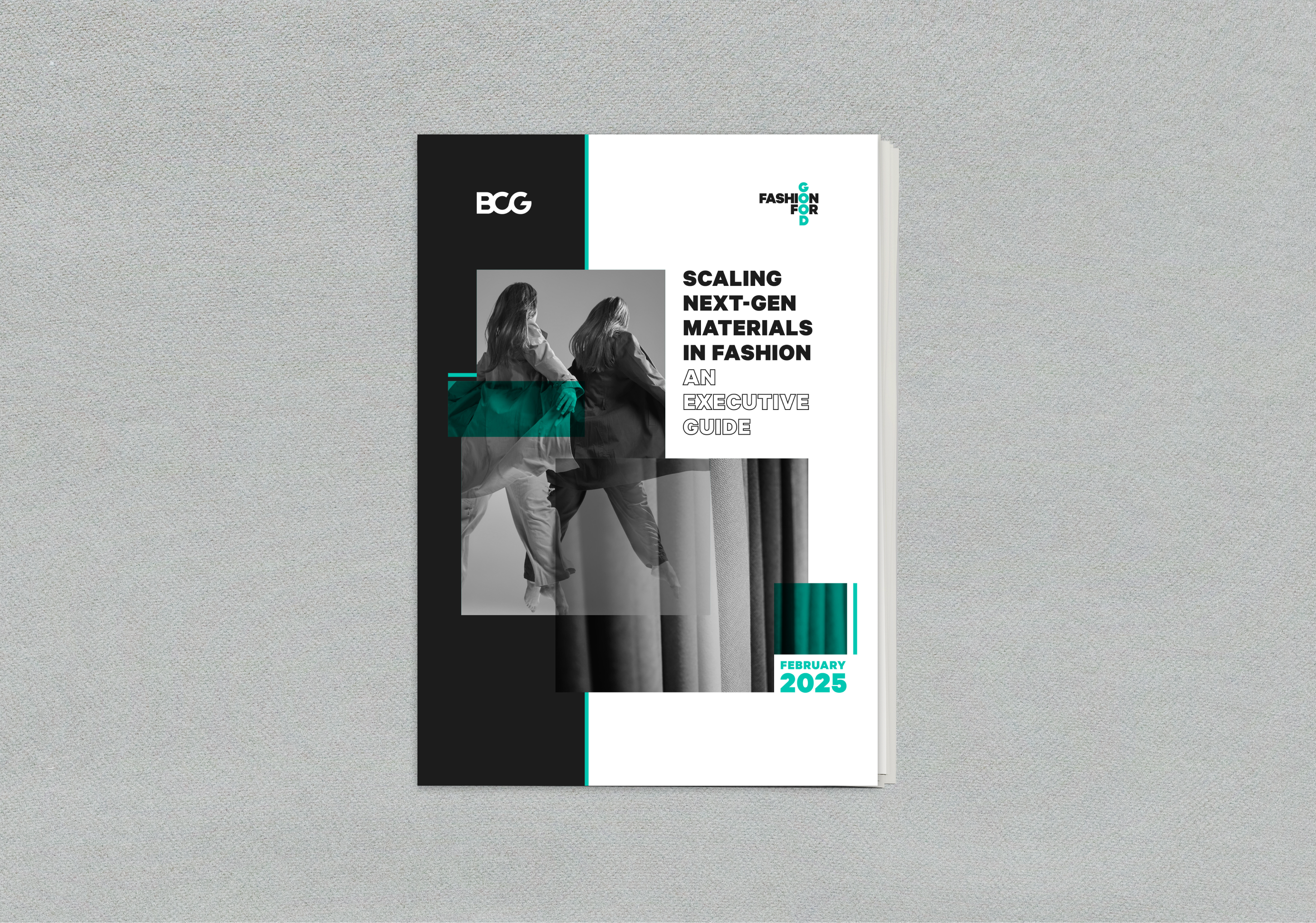
Bending The Adoption Curve: Next-gen Materials To Reach 8% Of Fiber Market By 2030
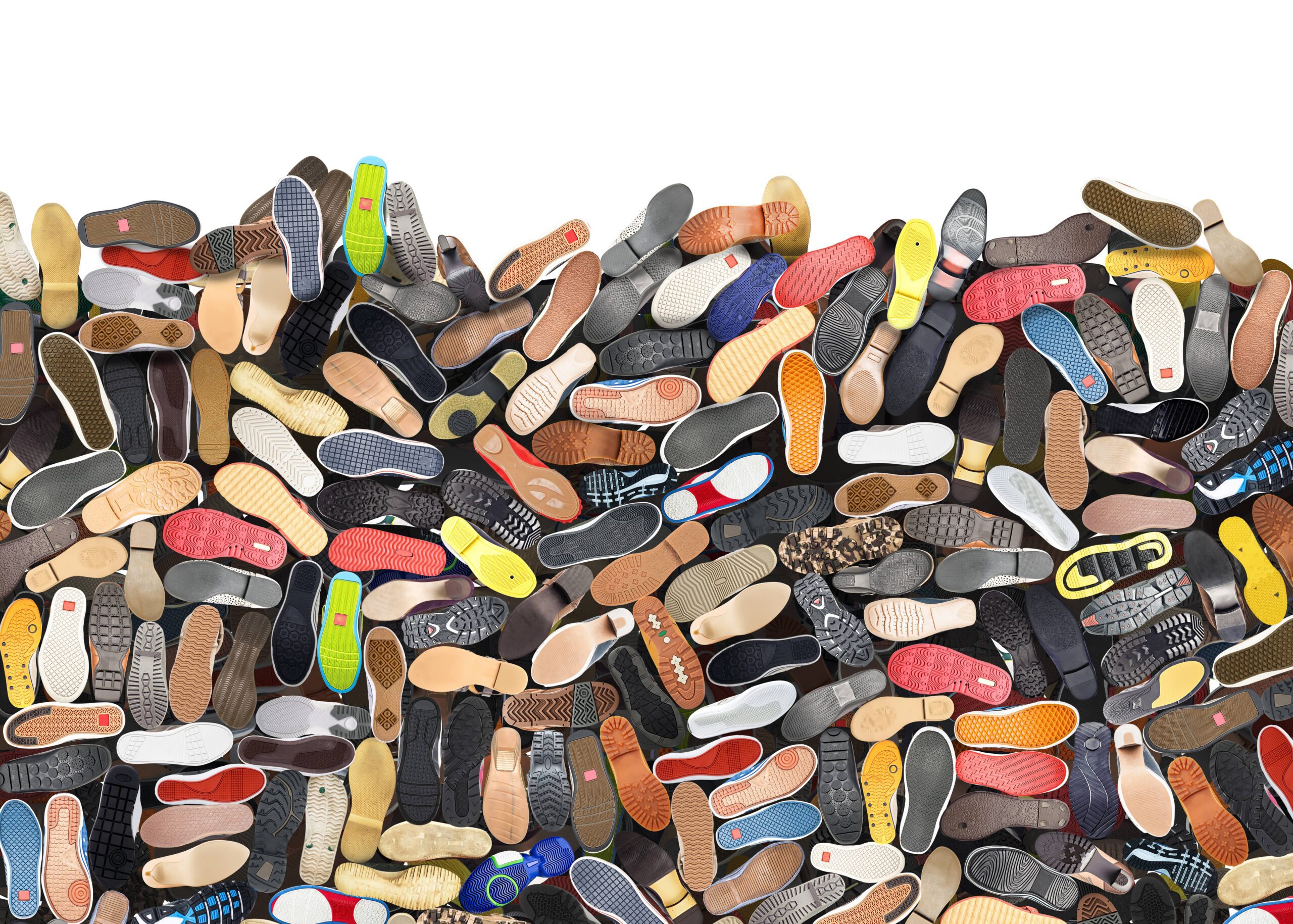
15 Brands Unite With Fashion For Good For Ambitious Push Into Footwear Circularity

What is impact and why does it matter?

Unlocking Opportunities for Supply Chain Innovation: India
2025 Forecast: 6 Major Shifts On Our Radar
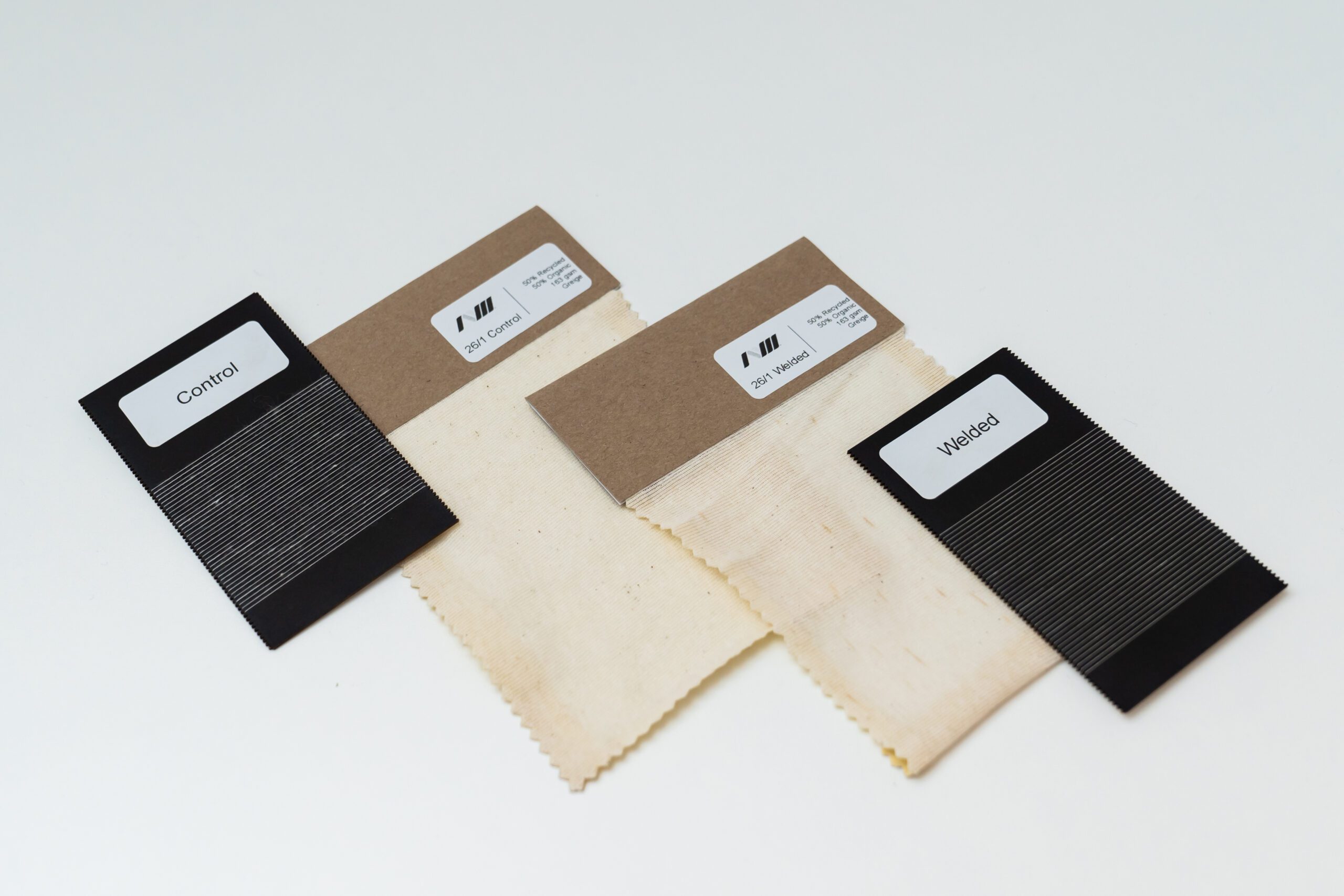
The Future of Fashion Tech: Types of Innovations in the Fashion Industry
The Future of Fashion Tech: The Innovation Lifecycle in Fashion Tech

The Future of Fashion Tech: Hard Tech vs. Soft Tech in Fashion Innovation
The Future of Fashion Tech: The Role of Fashion for Good in Driving Innovation

The Future of Fashion Tech: The Demand for Innovation in the Fashion Industry

Steady in the storm: navigating change and growth in 2024
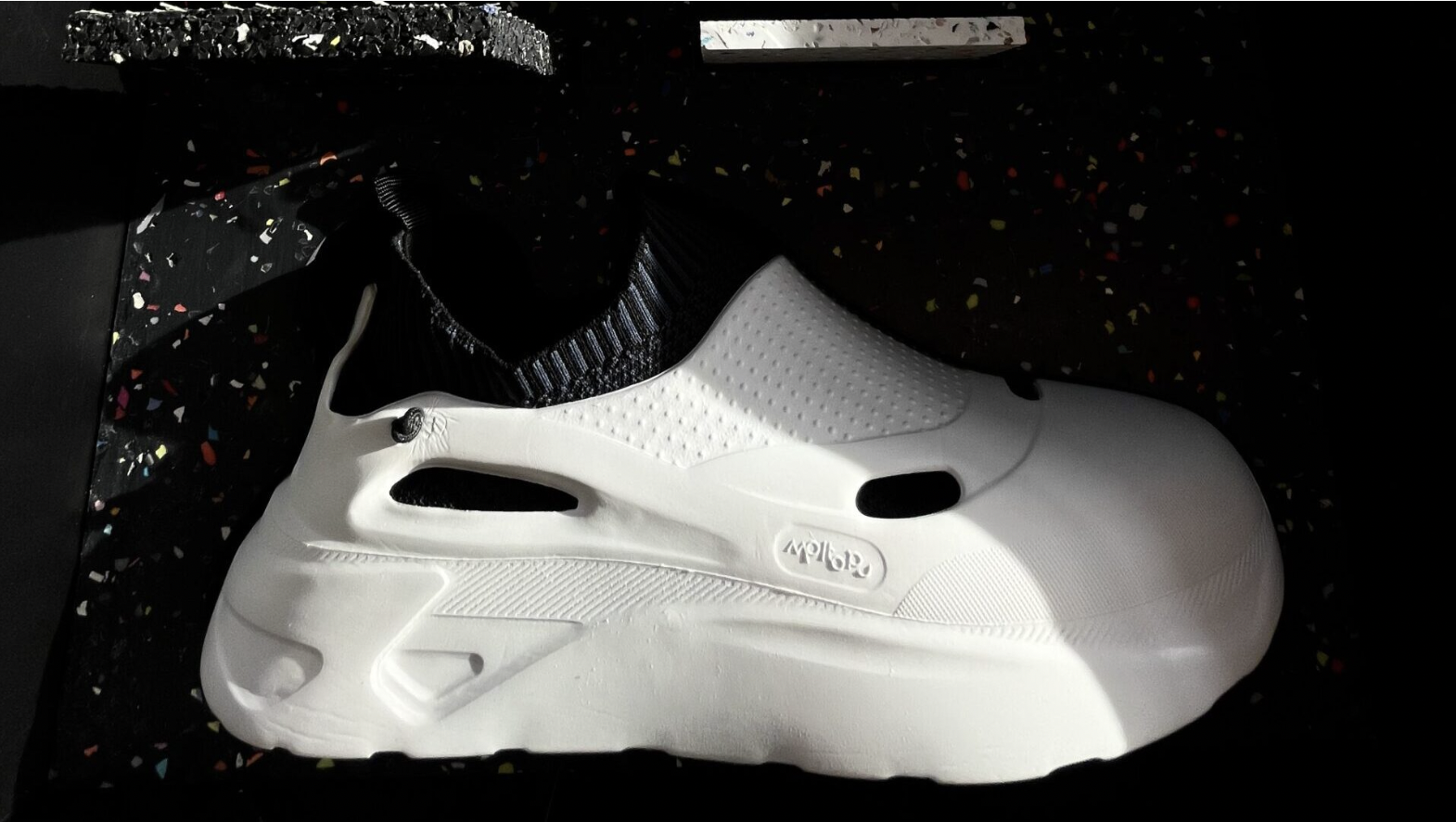
Key findings from the Fast Feet Grinded Collaborative Pilot
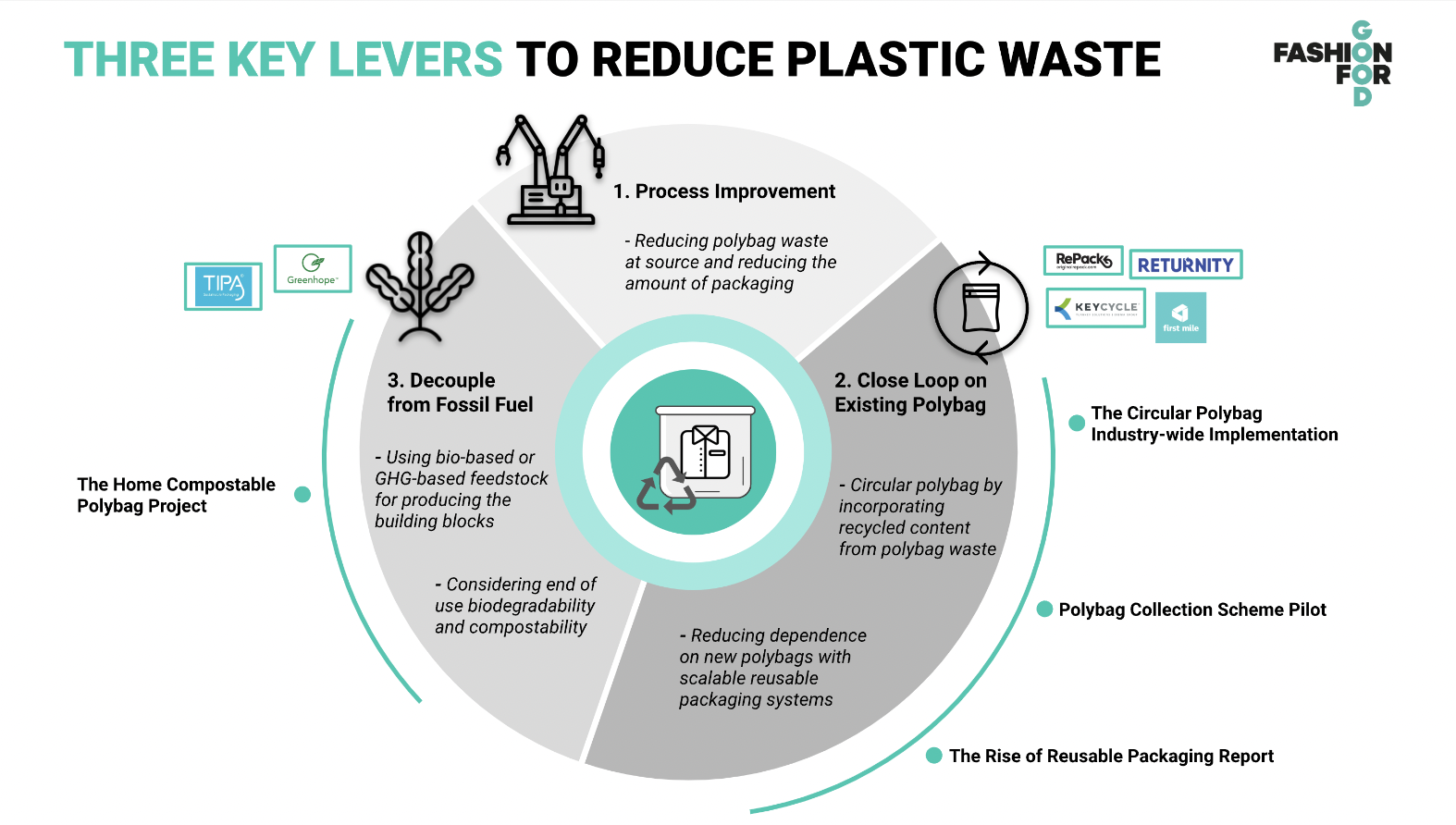
Unpacking the Packaging Problem: Solutions and Strategies

Not So Micro: an Exploration of the Impact of Fibre Fragmentation
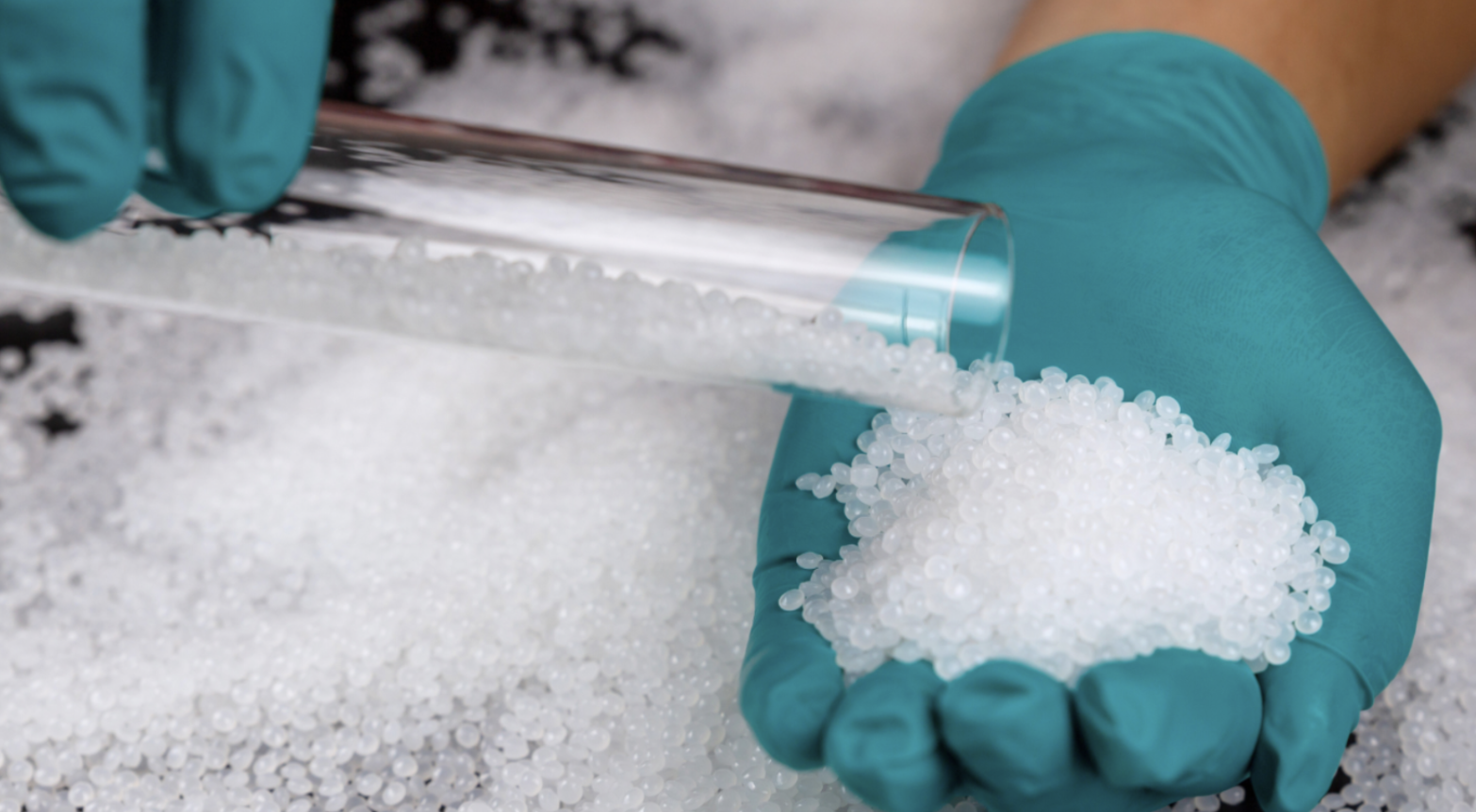
Fashion for Good launches the Feedstock Assessment for Biosynthetic Innovation
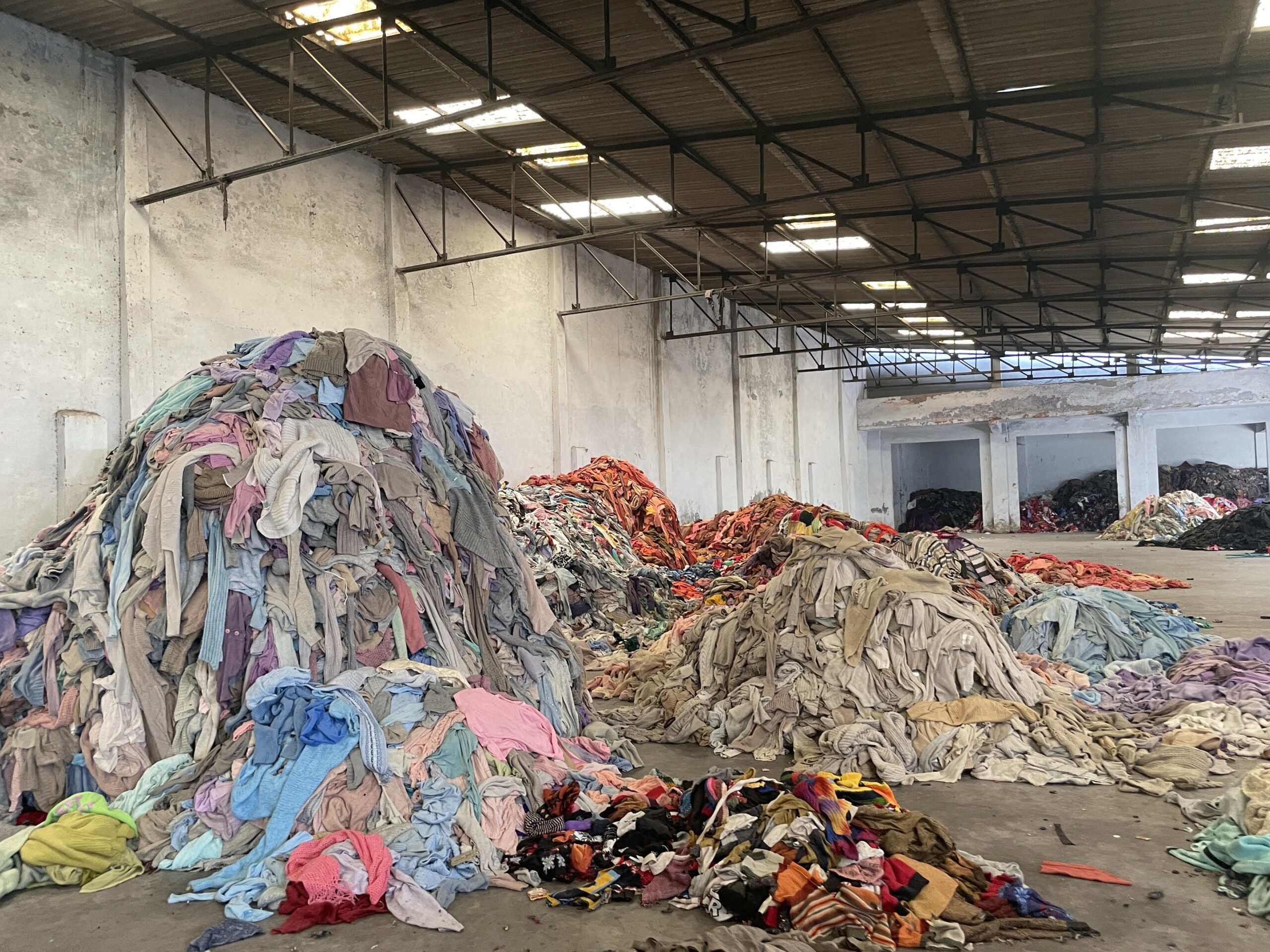
Fashion for Good Maps Global Waste Hotspots With A New Digital Tool: World Of Waste
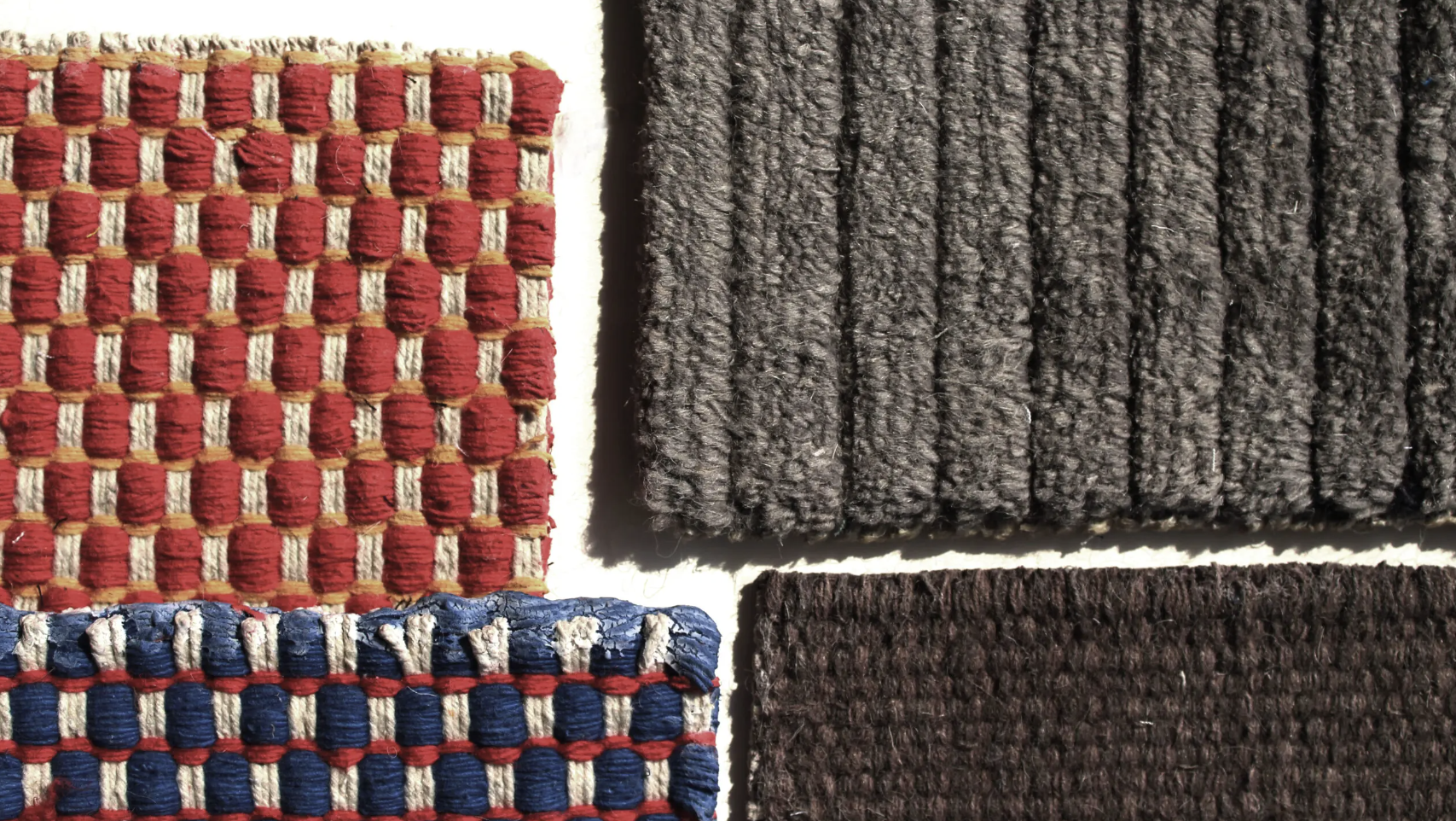
In Conversation with Altmat: Natural fibre made from agricultural residue
In Conversation with NFW: Creating biomaterials that support plastic-free design

Good Fashion Fund partners with K.K.P Fine Linen for new wet processing unit
AMSTERDAM – The Good Fashion Fund, the Laudes Foundation and the Fashion for Good initiated fund managed by FOUNT, has made an investment in K.K.P Fine Linen Private Limited (“KKPFL”) – a leading Indian manufacturer and exporter of bed linen and made-up products from Namakkal. The 2.0 million US Dollar loan will support K.K.P’ investment in the installation of an Effluent Treatment Plant (ETP) in their upcoming wet processing unit in SIPCOT, Perundurai, Tamil Nadu.
